SOLD - Evo 6 - Front And Rear Cut

SOLD TO Local Customer
This Front And Rear Cut Is Evo 6 - Engine 4G63 - Turbo - Manual - ( 4WD ) , Selling Together With All The Parts Shown In The Photos

Selling As Is Where Is Basis

To View Engine Revving, Click Video Below


General View Of The Front Cut

General View Of The Speedometer

Mileage Reading :- 73479 Kilometers Or 45657 Miles

Engine Tag Information

Chassis Number

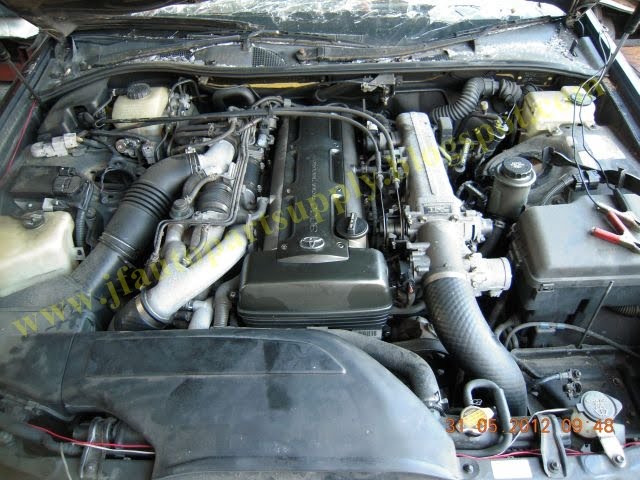
Front View Of The Engine Bay

Aftermarket Radiator Tank

Aftermarket Radiator Tank Brand

Inner Part Of The Engine

Top View Of The Turbo

Side View Of The Turbo

Side View Of The Engine Bay

Side View Of The Engine Bay

Carbon Fibre Bonnet

Driver Side - Fender - Good Condition

Driver Side -Head Lamp And Side Lamp - Good Condition

Driver Side - Carbon Fibre Canards - Damaged

Driver Side - Bilstein Absorber- High/Low /Soft And Hard With Pillow Ball Mount / Four Ports Endless Brake Caliper With Rotor

Close View Of The Four Ports Endless Brake Caliper


Driver Side - Aftermarket Fender Bar

Driver Side - Fender - Good Condition

Aftermarket Intercooler

Passenger Side - Fender - Good Condition

Passenger Side - Head Lamp And Side Lamp - Good Condition

Passenger Side - Carbon Fibre Canards - Good Condition

Passenger Side - Bilstein Absorber- High/Low /Soft And Hard With Pillow Ball Mount / Four Ports Endless Brake Caliper With Rotor

Close View Of The Four Ports Endless Brake Caliper


Passenger Side - Aftermarket Fender Bar

Passenger Side - Fender - Good Condition

Red Arrow Indicate The Aftermarket Performance Parts

HKS SLD And VFC II

HKS - Speed Limit Defencer

VFC II

VFC II - The Advanced Variable Fan Controller

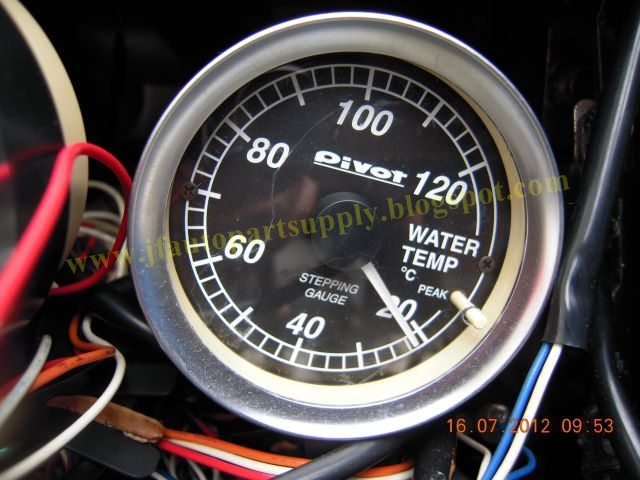
Two Units Pivot Meters

Pivot Water Temp Meter
Pivot Oil Temp Meter

Pivot Boost Meter

Driver Side - Door With Visor

Driver Side - Cover Torn


Driver Side - Close View Of The Torn Area

Driver Side - Close View Of The Torn Area

Passenger Side - Door

Passenger Side - Door Visor - Missing

Passenger Side - Door Cover - Good Condition

General View Of The Rear Cut With Doors Attached

Front - Driver Side Recaro Bucket Seat And Passenger Side Seat - Good Condition

General View Of The Back Seat - Good Condition

Complete Set - Back Roll Cage


Side View Of The Rear Seat

Side View Of The Rear Seat

Driver Side - Door With Visor

Driver Side - Door Cover - Good Condition

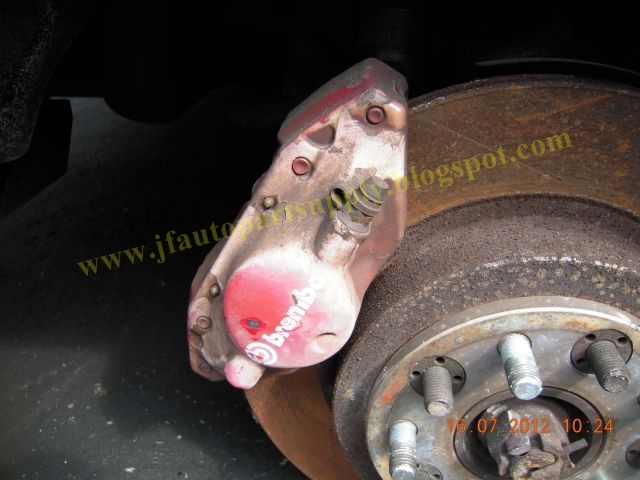
Passenger Side - Aftermarket Absorber With Brake Caliper And Rotor

Brake Caliper With Rotor
Driver Side - Bilstein Absorber

Driver Side - Tail Lamp - Cracked

Driver Side - Close View Of The Damaged Area

Passenger Side - Door With Visor

Passenger Side - Door - Dented

Passenger Side - Door Cover - Torn

Passenger Side - Close View Of The Damaged Area

Passenger Side - Aftermarket Absorber With Brake Caliper And Rotor

Brake Caliper With Rotor

Passenger Side - Bilstein Absorber

Passenger Side - Tail Lamp - Good Condition

Long Shaft

Complete Set Exhaust Pipe

Exhaust Dunk Brand

Red Circle Indicate Damaged Area
Complete Rear Axle And Fuel Tank Still Attached To The Body
Centre Gear
Back View Of The Rear Undercarriage
Additional Roll Cage And Strut Bar
Rear Windscreen - Good Condition
General View Of The Rear Cut

SOLD - JZS 147 - Aristo Half Cut

SOLD To Local Customer
This Half Cut Model Is Aristo JZS 147 - Engine 2JZ-GTE - Auto , Selling Together With All The Parts Show In The Photos

Selling As Is Where Is Basis

To View Engine Revving, Click Video Below :-


General View Of The Half Cut

General View Of The Speedometer

Mileage Reading :- 084347 Kilometers Or 52410 Miles

Engine Tag Information

Chassis Number

Front View Of The Engine Bay

Side View Of The Engine Bay

Side View Of The Engine Bay

Inner Part Of The Engine

Front Turbo

Rear Turbo

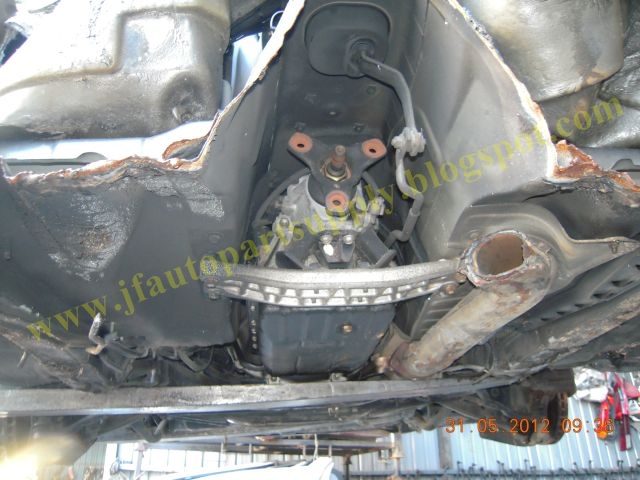
General View Of The Undercarriage

General View Of The Undercarriage

General View Of The Undercarriage

Back View Of The Auto Gear Box

Rear Axle With Complete Frame

Long Shaft - Not Complete Set

General View Of The Half Cut

So why all the fuss over HTML5?

HTML5 is not your father’s HTML – or, for that matter, your younger self's HTML. Nor is it simply a standard for delivering web content. Unlike its predecessors, HTML5 allows you to create an immense variety of applications and human machine interfaces (HMIs). It even lets you build applications that are neither connected to the Internet nor based on a traditional browser.

But don’t take my word for it. Check out the recent whitepaper,“Why HTML5 Is Becoming the HMI Technology of Choice,” from my colleagues Andy Gryc and Marc Lapierre.

To explain why HMI developers are turning to HTML5, Andy and Marc explore several themes. For instance:

  • HTML5 allows developers to construct applications either inside or outside of a browser, with capabilities such as databases, threading, and input from device hardware.
  •  
  • Using CSS3 animations, the <canvas> element, WebGL, and SVG graphics, HTML5 provides control over HMI rendering that is precise enough for games and flexible enough for applications.
  •  
  • The influx of software developers adopting HTML5 to build cross-platform applications is re-orienting the HMI development community, which is increasingly following traditional design patterns in its applications, separating the model (HTML/DOM), view (CSS), and controller (JavaScript) in a more maintainable architecture.

But what about the hardware?
Before you go, please note that the paper doesn't answer an important question; namely, how can an HMI developed with HTML5 communicate with a system's hardware devices? For instance, in the car, an HTML5-based HMI may need to communicate with the CAN bus, GPIO pins, and I2C and SPI devices, as well as with external devices like tablets and smartphones.

Fortunately, there's a paper for this, too. :-)

In "HTML5-Hardware Communication with PPS Messaging," also written by Andy Gryc, you'll find out how PPS, an HMI-agnostic, asynchronous messaging model, can provide a very flexible approach to communicating with in-vehicle hardware.

With PPS, devices don’t communicate with the HMI directly. Rather, they become publishers of data objects to which the HMI can subscribe. As a result, it becomes much easier to swap out or modify devices, as well as the HMI itself. This, of course, is the Reader's Digest version. Download the paper to get the fully skinny.


Further reading (and viewing)

If you're interested in HTML5 and the car, here are some other papers and posts I recommend:


Jeep Moose Test Failure

The reason that the Grand Cherokee failed the Swedish Moose Test run by Teknikens Värld is that they unintentionally overloaded the vehicle.  Apparently, Chrysler filed the wrong curb weight with the Swedish government. 

Since the behaviour of the Jeep Grand Cherokee was both dangerous and potentially lethal, we suspected that the car was actually packed with too much weight. We immediately proceeded to weigh the car on a scale and got our answer. The Jeep Grand Cherokee does not have a curb weight of 2 347 kilos (5 174 lbs) that the Swedish certificate of registration indicates (see the attached image below), a figure that Jeep/Chrysler has provided to Transportstyrelsen. In fact, the car actually has a curb weight of 2 505 kilos (5 523 lbs) with a driver in the car. That is a full 158 kilos (348 lbs) more than what Jeep/Chrysler claims the car to weigh in the official documentation provided to Swedish authorities.
Add the 602 kilos (1 327 lbs) that Jeep/Chrysler claims the car being capable to load and the total gross weight is now at 3 107 kilos (6 850 lbs). This can be compared to the claimed total gross weight in the vehicle's registration papers – 2 949 kilos (6 501 lbs). This, again, is a number that Jeep/Chrysler have provided. In other words – if one packs a Jeep Grand Cherokee Overland 3.0 CRD V6 with the maximum allowed capacity, one overshoots the total gross weight of the car by 158 kilos (348 lbs). Worth mentioning is that we only overshot the total net weight by 58 kilos (128 lbs) since we unloaded 100 kilos (220 lbs) out of the car when we performed the test as can be seen in the video clip. The car still went up on two wheels.

Coda: EV Penalty Box

A very unflattering review of the Coda sedan has been published in the NYT, written by Brad Berman.

In addition to a long list of missing basic equipment (no cruise control, no one-touch windows, etc.), Coda adds to its sins a stiff ride and poor NVH.

Perhaps Coda will find a large base of customers willing to sacrifice ride quality and amenities in exchange for a dependable range of 100 miles. I'm not in that group; in the production version I drove, the high-pitched whine was just the beginning of the Coda cacophony.
 
When starting out, the electric motor groans in low deep spasms as speed builds. At higher speeds, wind noise and buzzing intrude. The ride is harsh, giving passengers intimate knowledge of every imperfection in the road.

 The question for Coda is, will enough private buyers overlook creature comforts, and buy a $35,000 car based only on its range, or will they trade down in range to buy a more up-to-date EV like the Leaf for Focus?

The future of the self-driving car ain't what it used to be

Some people think self-driving cars are cool, others think they're very cool, and still others can barely contain themselves. Here, for instance, is an excerpt from an article I stumbled on a few days ago:

    "Some day in the future when you drive onto a superhighway, you’ll reach over to your dashboard and push the button marked “Electronic Drive.” Selecting your lane, you’ll settle back to enjoy the ride as your car adjusts itself to the prescribed speed. You may prefer to read or carry on a conversation with your passengers—or even to catch up on your office work. It makes no difference for the next several hundred miles as far as the driving is concerned."

Bring it on, I say. Especially since the technical challenges are far from insurmountable, or so the author claims. I quote again from the same article, which reviewed a study of driver assistance systems conducted on a public highway in Nebraska:

    The demonstration made two major points. First: the various elements of the system can be used immediately in conjunction with roadside and intersection lights to increase driving safety under present conditions... Second: the system as a whole can be developed without major technical complications into a fully automatic highway traffic control system. [emphasis mine]

Told you: This will be easy!

But here's the thing. This article dates from 1958, when it was published in a journal called Electronic Age. Here's a facsimile of the article's opening page, courtesy of the folks at the Modern Mechanix blog:


As you can see, the caption writer is even more optimistic, claiming that "electronic highways" (and, by extension, electronic drive) will eliminate accidents and make driving "foolproof".

Well, if the self-driving car is so easy, why haven't we seen it yet?

The short answer: we have. But it's a work in progress.

Giving up control
It all started 80 years ago, when GM introduced the first automatic transmissions. For the first time, the car started to make some driving decisions — namely, when to shift gears — on behalf of the driver.

Fast-forward to the early 1970s, when the first computerized anti-lock brakes came off the assembly line. These, too, do some "thinking" on behalf of the driver. When you slam your foot on the brake pedal of a car with anti-lock brakes, you're not really in control. You're just asking the braking system to make a series of decisions for you.

Fast-forward again to 2003, when Toyota introduced automatic parallel parking. With this technology, the car becomes even more autonomous, to the point of steering itself. More to the point, it does a better job at parallel parking than many humans — including yours truly.

Kicking out the jams
Other driver assistance systems also come to mind, including adaptive cruise control and collision avoidance technology. When you add them all up, it becomes obvious that the self-driving car is coming along nicely, thank you. Moreover, it's moving downmarket.

For instance, Ford recently announced Traffic Jam Assist, a combination of active cruise control and lane-position technology already available on the Focus, Escape, and Fusion. Using cameras and radar sensors, the new system will help the car stay in its lane and keep pace with other vehicles.

The Ford system signals an important trend. In a recent article, Doug Newcomb quoted Ian Riches of Strategy Analytics as saying. “In 2009, over 70 percent of ADAS (Advanced Driver Assistance Systems) technology was fitted to premium vehicles. By 2019, we’re forecasting only around 40 percent of ADAS will be on these premium vehicles..."

It don't come easy
Don't get me wrong. I realize that building a fully (or mostly) autonomous car is an immense challenge. Making it affordable is an even bigger challenge. But clearly, things are moving along. And, as my colleague Andy Gryc has pointed out, the sheer difficulty of achieving autonomy is precisely what will motivate some extremely intelligent people to pony up to the challenge.

Personally, I don't know what fascinates me more: the engineering behind these advances or that people are becoming accustomed to letting go — of their steering wheels, of their gas pedals, of being in control. It's an interesting socialization process.

Either way, one thing is for sure: the self-driving future really ain't what it used to be. Because, this time, it's real.

Moving pictures
Enough talk. Here's a video of Ford's proposed Traffic Jam Assist system, which can take of steering, braking, and acceleration in stop/start traffic:


QNX CAR goes to school

A while back, my good friends at Freescale approached me about sponsoring a program called EcoCAR 2. Established by the U.S. Department of Energy (DOE) and General Motors, EcoCAR 2 challenges 15 North American universities to create a greener vehicle without compromising performance, safety, and consumer acceptability.

This initiative isn't really new as it builds on a 23-year history of DOE advanced vehicle technology competitions. What is new is that, for the first time, students are being asked to include an infotainment system in the vehicle.

This is an exciting opportunity for QNX. Being able to work with young minds and supporting university research has always been a priority, but this is the first time we've been able to engage so directly with the next generation of automotive engineers. We are enabling them in much the same way that we enable our customers, with full access to the QNX CAR application platform as the baseline for their systems.

This is year one of a three-year program. Given the innovation that has gone into the QNX CAR platform by QNX and its ecosystem in the last year alone, I cannot imagine what the bright young minds will come up with for 2014. Looking forward to it...


Resources